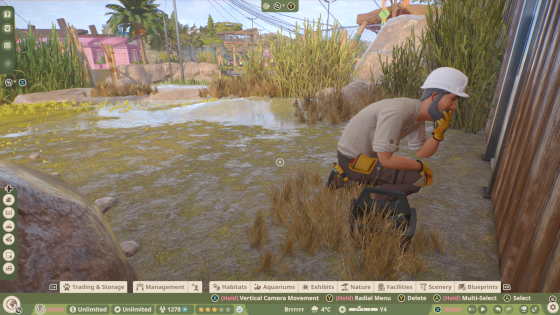
Research has always been an important part of Planet Zoo. Researching a species unlocks new enrichment items and higher-quality food, while also making education about that animal more effective for guests. In the original game, though, once you had unlocked everything you wanted and pushed an animal’s welfare comfortably into the green, there wasn’t much further to go.
Planet Zoo 2 changes that with a new Thriving system. In simple terms, Frontier is adding another goal beyond keeping an animal healthy and meeting its normal welfare requirements. Thriving involves going beyond that to create a more natural and enriching environment for your animals. Thriving animals can live longer, guests are encouraged to donate more, and Thriving contributes to your zoo’s wider Animal Husbandry rating.
How Does Thriving Work in Planet Zoo 2?
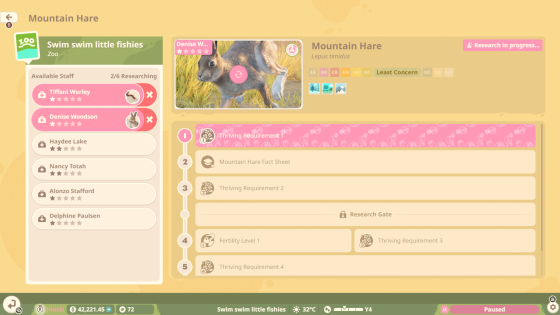
Frontier says you’ll need to research a species before you can achieve Thriving status, giving you a better understanding of what the animal would need in the wild. The process appears to be: bring an animal into your zoo, meet its normal welfare requirements, research the species, uncover its more demanding requirements, then improve its care and habitat accordingly until it can Thrive. Frontier’s own description calls Thriving a step beyond simply meeting an animal’s welfare needs.
That gives research a much more meaningful purpose than simply being something you complete to unlock better food, enrichment items, and education bonuses. It now becomes relevant to habitat building too, turning it into an ongoing process instead of getting your habitat into the green and then mostly leaving it alone.
Normal welfare still includes the familiar Planet Zoo requirements such as food and water, enough space, appropriate terrain and plants, suitable social conditions and enrichment. Your habitat might already be perfectly acceptable, then research effectively comes along and says: Lovely. Now make it better.
Hands-on testers have shown examples of Thriving requirements including increasing an animal’s food grade and providing multiples of particular enrichment items.
Research Finally Has Somewhere Else to Go
One of the more significant changes, especially for builder-focused players, is what Thriving does to animal research. Research was already useful: assign a vet, wait for another research level, unlock a better food grade or a new enrichment item, and repeat until the research was finished. But once you had unlocked the things you wanted, it could easily become something you mostly left running in the background.
Planet Zoo 2 makes research part of creating a genuinely excellent environment and effectively provides a second development phase. Your first goal is to make the enclosure work. Then, as your knowledge of the animal improves, you can return to it and make the enclosure exceptional. Frontier says veterinary research can unlock new items and improved welfare options, and also plays a role in releasing animals into Wildlife Reserves.

For players like me who can apparently spend three hours deciding whether one rock is four inches too far to the left, being given a legitimate gameplay reason to return to the design and build of the enclosures is truly exciting.
Thriving Connects to the New Animal Behavior System
Thriving is not the only big animal welfare change coming to Planet Zoo 2. Animals are now going to communicate much more of their condition through their actual behavior.
Frontier has demonstrated animals changing their activity and body language depending on their mood and environment, such as becoming lethargic when something is wrong with their habitat. The idea is that players should be able to notice that an animal isn’t happy by looking at the animal itself rather than relying entirely on menus and welfare bars. Frontier has described Planet Zoo 2 as a generational leap in animal behavior, with animals reacting more authentically to their environments.

Animals will interact more naturally with their surroundings too, using ordinary environmental objects in ways that previously relied more heavily on specific enrichment items, such as rubbing and scratching against suitable scenery. The goal seems to be that a great habitat should allow animals to behave more naturally, while research gives you more information about how to create those conditions.
Thriving Does More Than Make Your Animals Happier
A more practical reason to bother with all of this, if simply wanting your animals to have lovely lives isn’t enough, is that animals that reach Thriving status can live longer, while guests who see that higher standard of care are encouraged to donate more money.
Higher-grade food, extra enrichment, habitat changes, and anything else needed for Thriving may cost more money upfront. In return, you can potentially keep valuable animals for longer and generate additional donations from guests.
Planet Zoo 2 also changes how your overall Zoo Reputation is calculated. It is a five-star score based on four main areas: Animal Husbandry, Sustainability, Guest Education and Guest Experience. Frontier specifically says Animal Husbandry takes into account both ordinary animal welfare and whether your animals are Thriving.
What We Still Don’t Know About Thriving
There are still plenty of details that we probably won’t know for certain until Planet Zoo 2 launches. In particular, I’m looking forward to discovering whether animals can achieve different levels of Thriving or lose Thriving status if their conditions deteriorate. It is also unclear whether Thriving affects fertility or offspring, and whether Sandbox Mode can unlock, disable, or otherwise modify Thriving requirements.
Another thing that isn’t clear is whether Frontier’s use of the word “thrive” when discussing animals in Wildlife Reserves refers to the same formal Thriving state used inside zoos. Frontier describes Wildlife Reserves as natural homes that allow animals to thrive, but it has not clearly said that this uses the exact same Thriving mechanic.

Aquariums, aviaries and new animals are getting a lot of attention, but while Thriving is a much quieter change, it could have a surprisingly large effect on how we actually play. It gives you a reason to come back, improve your animals’ care, rethink their habitat and ask, “Have I actually given it the best environment I can?” For a game about caring for animals, from a developer that clearly places animal welfare at the center of the experience, that feels like a pretty fitting addition to the sequel.
Frequently Asked Questions
Do animals need 100% welfare before they can Thrive?
Do you need to research an animal before it can Thrive?
Support Unboxed Reviews
Donations are entirely voluntary. Supporters receive no editorial influence — our reviews remain 100% independent.