Planet Zoo 2 is finally giving us proper aquariums. Not the slightly unhinged Planet Zoo workaround where you spend hours lowering terrain, lining up a staff gate at ground level with underwater viewing, and shouting at the screen that yes, water absolutely can go there while the game tells you otherwise for the eighth time.
With Planet Zoo 2 launching on October 13, 2026, aquariums are easily one of the features I’m most excited about. But they raise a lot of questions. How freely can we build them? What animals can live together? How deep do they need to be? What are shoals? Can the tanks actually leak? And do the staff really get changed into diving gear and go swimming?
Frontier has now revealed a surprising amount about how aquariums work, and several players have also spent time with them in pre-release builds. Here’s everything we know so far.
Planet Zoo 2 Aquariums Are Proper Custom Habitats
First, and importantly, aquariums aren’t prefabricated tanks that you simply place like an exhibit. Frontier describes them as fully customizable habitats, built using many of the same ideas as terrestrial habitats. You control their size, shape, height, location, scenery, and how guests view the animals inside them. Staff access and filtration then turn that structure into a functioning aquarium.

Aquarium barrier walls can be adjusted in height and curvature, while the orientation of viewing glass can also be changed. Frontier has also shown adjustable guest tunnels and more naturalistic ways to disguise or minimize barriers, meaning you can build conventional tanks, huge irregular aquariums, open-topped habitats, sunken viewing areas, curved glass displays, underground sections and aquariums spanning multiple levels.
Even the appearance of the water can be customized, giving builders another way to differentiate something like a crystal-clear tropical aquarium from a darker, more naturalistic freshwater environment.
Aquarium Depth Actually Matters
Planet Zoo gave us climbing requirements, but Planet Zoo 2 has taken this to the next level and given us something entirely new to worry about: usable three-dimensional space. Fully aquatic animals navigate through the entire water volume rather than behaving like terrestrial animals that happen to be swimming. Frontier says developing aquarium animals required full 3D navigation, with new systems allowing animals to properly move through the water and around scenery. It’s part of a wider technical change that also powers Planet Zoo 2’s fully flying birds.
Different species also prefer different positions in the water, naturally occupying different depths rather than every animal swimming around the aquarium in exactly the same way. That means depth isn’t just there to make the aquarium look impressive. It is included as part of an animal’s habitat requirements.
Thankfully, Frontier is abstracting real-life depth requirements. We’re not going to need to excavate a 200-meter shark hole underneath Chief Beef because an animal’s natural range happens to extend into the deep ocean. Probably for the best.
Freshwater, Saltwater and Brackish Aquariums
Aquarium management goes far beyond making sure your animals are technically submerged. Planet Zoo 2 supports freshwater, saltwater, and brackish water, with different species requiring suitable conditions. A water network and filtration system help provide and maintain the appropriate environment for the animals inside.

Aquatic animals still have familiar Planet Zoo requirements such as food and enrichment, but the water itself adds another management layer. You’ll be managing temperature and lighting alongside water type, cleanliness, filtration, and usable water volume.
Filtration Doesn’t Mean the Aquarium Cleans Itself
The aquarium’s water network helps maintain suitable water conditions, but it doesn’t magically make staff unnecessary. Dirty aquariums increase the likelihood of animals developing disease, but they can also make it harder for guests to see through the glass, impacting their happiness. Staff therefore still need to enter the aquarium and clean the viewing windows even when a filtration network is doing its job.

This brings us to one of the stranger questions Planet Zoo 2 has now answered. Yes, keepers actually dive into the aquariums. They don’t stand outside the glass waving a cleaning brush at it. Frontier has shown staff physically entering the habitat in diving equipment to perform jobs such as feeding animals and cleaning the tank. It also means staff access needs to become part of aquarium planning. Instead of a standard habitat staff gate, aquariums use an airlock.
Aquarium barriers can also crack and spring leaks. Different barrier types provide different levels of protection against leaks and cracks, while mechanics can be assigned to conduct routine checks to help prevent problems.
What Frontier hasn’t properly demonstrated yet is exactly what happens once a leak develops and how dramatically the game simulates an actual failure. Does the water visibly drop? Does a mechanic simply arrive and repair the crack? Can I accidentally recreate Titanic underneath the gift shop? I know the objective is technically to prevent this situation, but I still need to see it happen at least once.
Hero Animals and Shoals Work Differently
Not every fish in Planet Zoo 2 is managed individually. There are “hero” aquatic species for some individually simulated aquatic animals, and then there are smaller fish that operate as shoals. Hero animals function much more like the habitat animals we already know. They’re individually represented and managed, with their own welfare requirements. Shoaling species are handled collectively instead.
That means you won’t need to inspect Barry the Sardine, Susan the Sardine, Peter the Sardine and another 147 individual sardines because one of them is slightly annoyed about the water temperature. Instead, the shoal acts as the management unit.
Importantly, shoals aren’t just animated scenery. They’re living aquarium inhabitants. The system simply provides a way to have smaller fish without turning your animal-management menu into Excel: Fish Edition. Shoals can grow over time, and some aquatic species can also be released into suitable Wildlife Reserves, connecting aquariums with Planet Zoo 2’s wider conservation focus.
Keeping Your Aquarium Animals Happy
Multi-species aquariums are very much part of Planet Zoo 2 based on the footage and pre-release builds we’ve seen so far, but that doesn’t mean you can throw 14 pretty fish and a shark into one tank and hope they establish a functioning democracy. Water requirements, environmental conditions, social needs and species compatibility matter. Predator-prey relationships also need to be considered, for fairly obvious reasons.
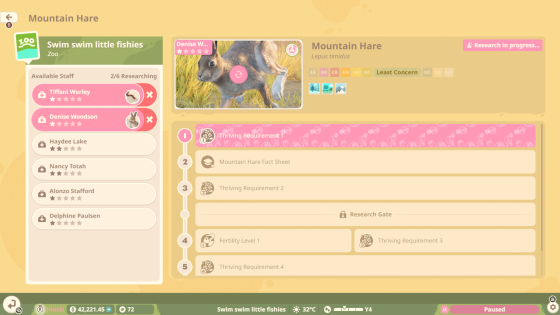
Aquatic animals can also thrive. Planet Zoo 2 introduces the new Thriving system, and aquatic animals are part of it. Normal welfare still matters, but Thriving goes beyond simply keeping an animal healthy. After researching a species, players can discover additional requirements that represent a higher standard of care.
Underwater Viewing Gets a Major Upgrade
Guest viewing looks to be one of the most exciting improvements for aquarium builders. Planet Zoo 2 supports proper underwater tunnels, allowing guests to walk beneath and through aquatic habitats while animals swim overhead. Not only that, but aquariums can also form part of multi-level and underground builds, opening up the possibility of viewing the same habitat from different heights. You could have near-surface viewing, deeper underwater galleries and tunnels beneath the animals rather than one giant window being your only option.
All that wonderful glass does have a downside, though. Guest exposure can affect aquatic animals just as it can terrestrial species. Stressed animals can be managed with one-way glass and, wonderfully, “Don’t Bang on the Glass” signs.
The underwater camera has had a makeover too. You can freely move the camera, and hands-on players have reported a splash as it passes through the water surface, an altered soundscape while underwater, and visible water effects as the camera emerges again.
There has been a huge overhaul of the water technology in general, from refraction, caustics and ripples to waves caused by animal movement. Aquariums aren’t only treating us to new gameplay mechanics; they’re also a clear showcase for Planet Zoo 2’s graphical upgrades.
Excitingly, pre-release footage has shown terrain being raised inside aquarium habitats to create land and islands, alongside aviary-style coverage above aquatic areas. That suggests the different habitat systems may be able to overlap more freely than I had expected.
If that flexibility carries through to the final game, it enables some fantastic possibilities for species that need a combination of land and water, as well as huge mixed environments that blur the lines between aquarium, habitat and aviary. Discovering what terrestrial, aquatic and aviary combinations actually work may mean I’m never leaving the house again, and I’m ok with that.
What Did People Who Actually Play Planet Zoo 2 Aquariums Think?
Pre-release hands-on coverage has been consistently positive, with previewers highlighting the freedom of aquarium construction, underwater tunnels, proper three-dimensional animal movement, staff interactions and the fact that aquariums feel like a genuine extension of Planet Zoo’s habitat system rather than glorified exhibits.
The only downside is the Planet Zoo 2 complexity meter for those of you playing on console. While we don’t know enough about it yet to know how much next-gen consoles will be restricted, having all these new building options and a limit might be a painful compromise.
Which Aquarium Animals Are Confirmed for Planet Zoo 2?
At the time of writing, 35 animals have been confirmed for Aquarium use, with 32 included in the base game and three included with the Planet Zoo 2Deluxe Edition. Frontier is still revealing its final launch animals, with 4 still to go before launch on October 13.
Planet Zoo 2 Base-Game Aquarium Animals
- African Tigerfish
- Blackspotted Puffer
- Blacktip Reef Shark
- Bluespine Unicornfish
- Blunthead Cichlid
- Boeseman’s Rainbowfish
- Brown Trout
- Clown Anemonefish
- Clown Loach
- Clown Triggerfish
- Common Rudd
- Dolphinfish
- Giant Gourami
- Giant Grouper
- Golden Trevally
- Hawksbill Turtle
- Humphead Wrasse
- Indian Ocean Oriental Sweetlips
- Indo-Pacific Leopard Shark
- Indo-Pacific Sergeant
- Javanese Cownose Ray
- Ocean Sunfish
- Ocellated Eagle Ray
- Pacific Bluefin Tuna
- Pacific Sardine
- Palette Surgeonfish
- Red Lionfish
- Sailfin Snapper
- Schooling Bannerfish
- Threespot Damselfish
- West Indian Manatee
- Yellow Tang
Planet Zoo 2 Deluxe Aquarium Animals
- Blue and Gold Fusilier
- Great Hammerhead
- Longfin Batfish
According to the Zoopedia, some smaller fish are listed for both Aquarium and Exhibit use, giving players a choice between incorporating smaller fish into huge mixed aquarium displays or keeping them in more traditional compact exhibits.
The West Indian Manatee is a confirmed aquarium animal, which is significant because it proves Planet Zoo 2’s fully aquatic system isn’t limited to fish, sharks, rays, and turtles; aquatic mammals work within the system too, which leads to another question.
What About Dolphins, Whales and Orcas?
No cetaceans are currently confirmed for Planet Zoo 2 at launch. Frontier has specifically addressed dolphins, whales and porpoises, saying it wants every animal represented in an environment that properly reflects its requirements. It has also pointed to ongoing research into cetacean conservation and rewilding programs and said it is keeping an eye on how the conservation community’s work develops.
That isn’t the same as Frontier saying cetaceans can never appear in Planet Zoo 2, but there are currently no dolphins, whales, porpoises or orcas confirmed for launch.
Frequently Asked Questions
Are aquariums included in the Planet Zoo 2 base game?
Do I need the Deluxe Edition to build aquariums?
Does Planet Zoo 2 have a separate aquarium staff type?
Can aquarium animals be released into Wildlife Reserves?
Support Unboxed Reviews
Donations are entirely voluntary. Supporters receive no editorial influence — our reviews remain 100% independent.